
Maintenance
Garage Door Maintenance & Safety Inspections
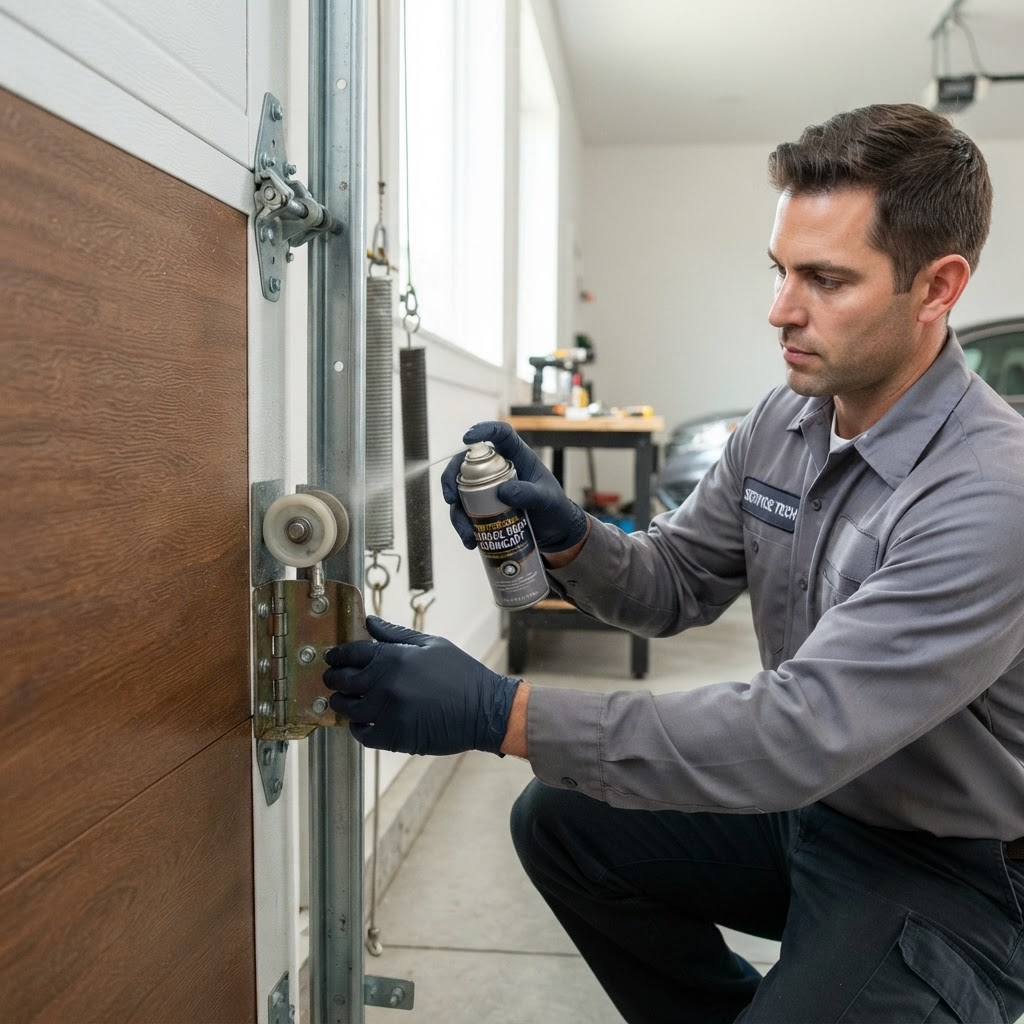
Regular maintenance keeps your door balanced, quiet and safe, and catches small problems before they leave you with a door stuck open or closed. Our inspection covers every part of the system.
- Full multi-point inspection
- Adjust, tighten & lubricate
- Extends door & opener life
A garage door goes through thousands of cycles a year, and like anything mechanical, it lasts longer and works better with a little regular attention. A yearly maintenance visit keeps the springs, cables, rollers and opener in good shape, keeps the door balanced and quiet, and gives a technician the chance to catch a worn part before it fails at the worst possible moment. For a door used every day, an annual service is a sensible baseline.
During a maintenance visit we inspect the full system, adjust and tighten hardware, lubricate the moving parts, and test the opener's safety features. If we find something that should be repaired, we explain it clearly so you understand the true condition of your door, without pressure to approve work you do not need.
Our inspection
What a Local Brothers safety inspection covers
We check each of these components for wear and correct operation, adjusting as we go, so you know exactly where your door stands.
- 01
Control Panel / Remotes / Keyless Entry
We confirm the wall console, remotes and any keyless entry pad send a clean signal and operate the door reliably.
- 02
Safety Eyes
The photo-eye sensors near the floor are checked for alignment and correct auto-reverse when the beam is broken.
- 03
Motor / Gear
The opener motor and internal drive gear are inspected for wear, grinding and heat that signal a failing unit.
- 04
Door Balance
With the opener disconnected, a balanced door should hold in place halfway. Poor balance strains every other part.
- 05
Springs
Torsion and extension springs are checked for gaps, rust, stretch and cycle wear that lead to sudden failure.
- 06
Rollers
Worn, cracked or seized rollers cause noise and binding. We check each roller and its stem inside the track.
- 07
Cables
Lift cables are inspected for fraying and proper seating on the drums, since a failed cable drops the door.
- 08
Drums
The cable drums are checked for grooving and even winding so both sides of the door lift together.
- 09
Shaft
The torsion shaft is checked for straightness and end-bearing wear that cause wobble and uneven travel.
- 10
Brackets
Bottom brackets, center bearing plate and end bearing brackets are checked for tightness and cracking.
- 11
Tracks
Vertical and horizontal tracks are checked for dents, bends and alignment that pull a door off track.
- 12
Bottom Weather Seal
The bottom astragal seal is inspected for cracks and gaps that let in water, dust and pests along the floor.
Why it matters
Small adjustments prevent big repairs
Most major garage door failures give quiet warnings first: a door that is slightly out of balance, a roller starting to bind, a spring showing early wear. Left alone, those small issues put extra strain on the rest of the system and eventually cause a breakdown. Regular maintenance is the simplest way to avoid an emergency repair and to get the full life out of your springs and opener.
Schedule a safety inspection
Keep your door balanced, quiet and safe with a thorough annual check.
Good to know
Frequently asked questions
How often should a garage door be serviced?
For a door that is used every day, a yearly maintenance visit is a sensible baseline. During service the springs, cables, rollers, tracks and opener safety features are inspected, hardware is tightened, and moving parts are lubricated. Regular maintenance keeps the door balanced and quiet, extends the life of the springs and opener, and catches small problems before they leave you with a door stuck open or closed.
What should I do if my garage door comes off its track?
Stop using the door immediately and do not try to force it back on with the opener. A door off its track is unstable and under load from the springs and cables, so continuing to operate it can cause further damage or injury. Keep people and vehicles clear of the opening and schedule a repair so the rollers, track and hardware can be inspected and the door reset safely.
Why is my garage door making loud noises?
Grinding, squealing, rattling and popping usually trace back to worn rollers, dry hinges and bearings, loose hardware, or springs that need attention. A rhythmic pop as the door moves can indicate a section binding in the track, while a grinding opener may point to a worn drive gear. Some noise is normal wear, but a sudden change in sound is worth an inspection before a small issue becomes a breakdown.
Why won't my garage door open?
The most common causes are a broken torsion spring, a snapped lift cable, misaligned or blocked safety sensors, a dead remote battery, or an opener that has lost power or travel settings. If the door feels unusually heavy or you hear a loud bang before it stopped working, a spring has likely broken and the door should not be forced. Leave it in place and call a technician, since a door with a broken spring can be extremely difficult and dangerous to move by hand.
Need Help With Your Garage Door?
Whether you're dealing with a damaged door, a broken component, an opener issue or you're considering a new garage door, contact Local Brothers Garage Doors to schedule professional service.
(714) 455-3837Or email localbrothersgaragedoor@gmail.com