Garage Door Spring Repair
Garage Door Spring Repair & Replacement
A broken spring is the single most common reason a garage door stops working. Because the springs are under high tension and carry the full weight of the door, replacement is a job for a trained technician.
- Torsion & extension springs
- Safe, high-tension work
- Urgent repairs prioritized
Garage door springs do the heavy lifting, literally. They counterbalance the weight of the door so the opener, cables and tracks are not overloaded and so the door can be raised smoothly. That counterbalancing puts the springs under enormous tension, and over thousands of open-and-close cycles they eventually wear out and break. When they do, the door usually becomes impossible to lift and unsafe to force.
Torsion and extension springs
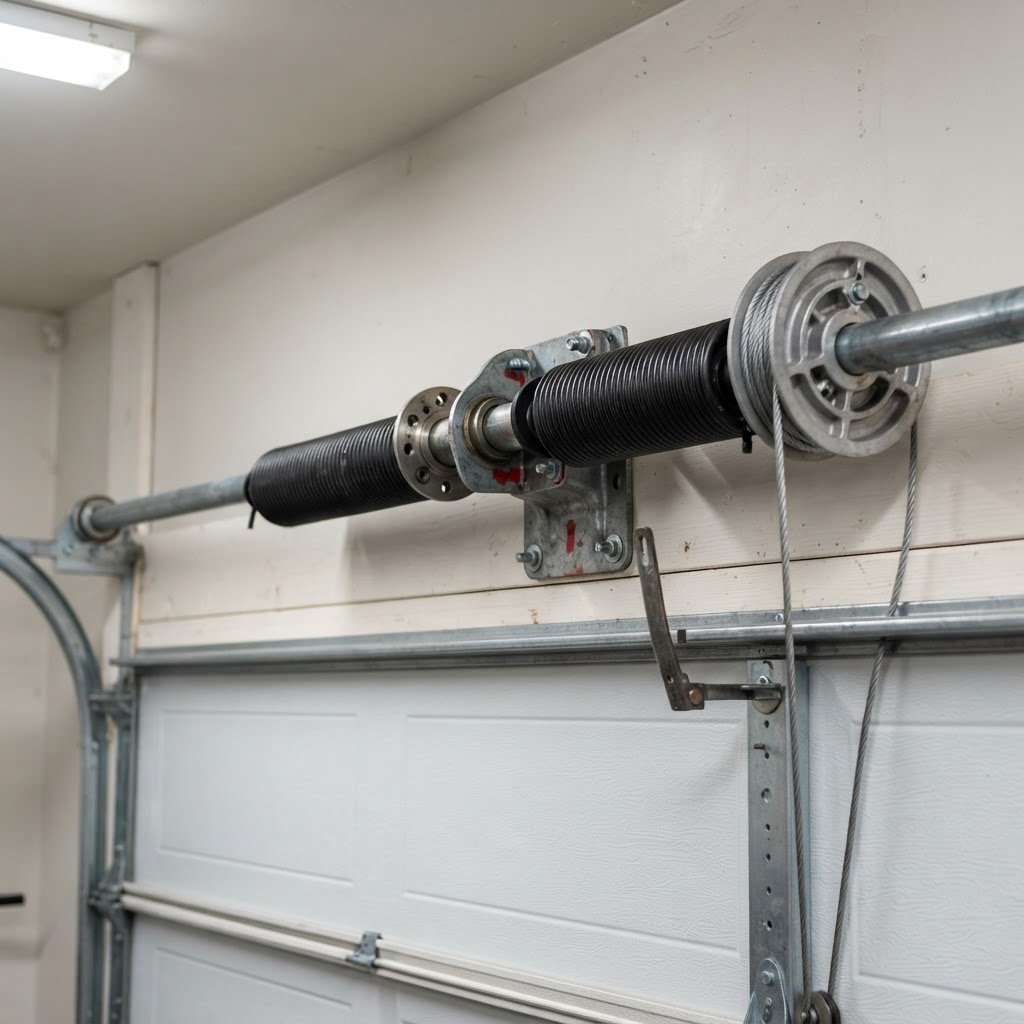
Most residential doors use one of two spring systems. Torsion springs mount on a shaft above the door opening and wind and unwind as the door moves. Extension springs run along the horizontal tracks on either side and stretch as the door closes. Both wear out with use, and both are dangerous to work on without the right tools and training because of the stored energy they hold.
Why spring replacement is not a DIY job
A spring under tension stores a large amount of energy. Released suddenly, it can cause serious injury. That is why we strongly recommend against attempting a spring replacement yourself, and why you should not run the opener or force the door open once a spring has broken. Doing so can burn out the opener motor, fray or snap the cables, and pull the door off its track, turning a single failed spring into a much larger repair.
What to do when a spring breaks
If you hear a loud bang and the door will not lift, leave it in place, keep people and vehicles clear of the opening, and call for service. A door with a broken spring carries its full unbalanced weight, so it can slam shut if forced. It is safest to leave it alone until a technician arrives.
Our spring repair process
We inspect both springs and the surrounding hardware, cables, drums, bearings and the torsion shaft, because a spring failure often stresses those components too. We replace worn springs with the correct size and cycle rating for your door, then re-balance and test the door so it holds its position and operates smoothly before we leave. If both springs are original, replacing them as a pair usually makes sense, since a spring that is about to fail rarely gives much warning.
A broken spring is often part of a larger picture of wear. If your door is also noisy or moving unevenly, our garage door repair service covers the full system, and a maintenance visit can extend the life of new springs.
Talk to a Garage Door Technician
Tell us what your door is doing and we'll help you figure out the next step.
Good to know
Frequently asked questions
What are the signs of a broken garage door spring?
A broken spring usually announces itself with a loud bang, followed by a door that will not lift or that only rises a few inches before stopping. You may see a visible gap in the torsion spring above the door, cables hanging loose, or the door sitting crooked in the opening. The opener may strain, hum, or run without moving the door. Because the springs carry the full weight of the door under high tension, spring replacement should always be handled by a trained technician.
Can a garage door operate with a broken spring?
It should not. The springs counterbalance the weight of the door so the opener, cables and tracks are not overloaded. Running an opener with a broken spring can burn out the motor, fray or snap the cables, and pull the door off its track. Forcing the door open by hand is also unsafe because the full unbalanced weight can slam it shut. If a spring has broken, stop using the door and schedule a repair.
Why won't my garage door open?
The most common causes are a broken torsion spring, a snapped lift cable, misaligned or blocked safety sensors, a dead remote battery, or an opener that has lost power or travel settings. If the door feels unusually heavy or you hear a loud bang before it stopped working, a spring has likely broken and the door should not be forced. Leave it in place and call a technician, since a door with a broken spring can be extremely difficult and dangerous to move by hand.
How often should a garage door be serviced?
For a door that is used every day, a yearly maintenance visit is a sensible baseline. During service the springs, cables, rollers, tracks and opener safety features are inspected, hardware is tightened, and moving parts are lubricated. Regular maintenance keeps the door balanced and quiet, extends the life of the springs and opener, and catches small problems before they leave you with a door stuck open or closed.
Related Garage Door Services
Need Help With Your Garage Door?
Whether you're dealing with a damaged door, a broken component, an opener issue or you're considering a new garage door, contact Local Brothers Garage Doors to schedule professional service.
(714) 455-3837Or email localbrothersgaragedoor@gmail.com